7 Photo Editing Strategies to Skyrocket Your Brand Growth
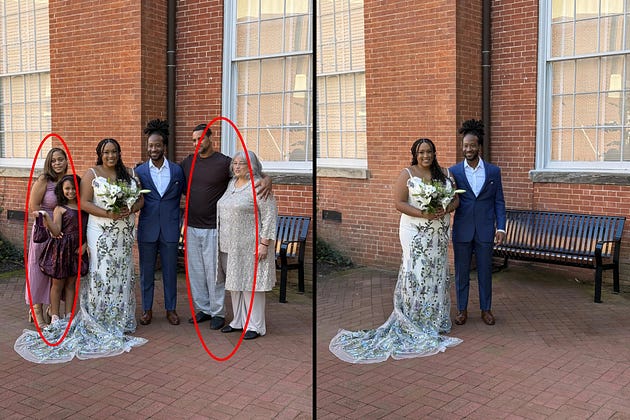
The internet is no longer a library. It is a television. It is a visual stream.
Today, your customer does not read. They scan. They scroll. They judge.
They judge your credibility in milliseconds. That judgment is based almost entirely on your imagery. If your photos look amateur, your business looks amateur. If your photos look premium, you can charge premium prices.
This process is no longer just “fixing mistakes.” It is not just about removing red-eye. It is a strategic weapon. It is how you control perception. It is how you guide the customer’s eye to the “Buy” button.
Most businesses treat the editing process as an afterthought. They take a photo, slap a filter on it, and post it. This is a waste. It leaves money on the table.
To win in 2025, you need a plan. You need a visual doctrine. You need a reliable photo editing service that understands marketing, not just pixels. Here are the seven strategies that transform small businesses into market leaders.
The “Mobile-First” Photo Editing Strategy
In the early days of the web, we designed for desktop monitors. We had wide screens. We had landscape orientation.
Those days are gone. 80% of your traffic is on a smartphone. The screen is vertical. It is small.
Yet, I still see businesses uploading wide, horizontal images to Instagram or TikTok. This is a mistake. It wastes screen real estate. A horizontal image takes up 30% of the screen. A vertical (4:5 or 9:16) image takes up 70% or 100%.
The Strategy: Edit for the phone, not the monitor. Crop tight. Remove the dead space on the sides. Fill the frame.
If you are selling a watch, the watch should fill 60% of the image. Do not show me the whole table. Do not show me the wall behind it. Zoom in. When a user is scrolling fast, big objects stop them. Small details get lost. Be bold with your crop. Dominate the screen.

The “Visual Anchor” Technique
Human eyes are lazy. We need to be told where to look.
If you take a photo of a living room, there is a lot of information. There is a couch. A rug. A window. A lamp. A painting.
If everything is equally bright and sharp, the eye wanders. The viewer gets overwhelmed. They scroll past.
The Strategy: Use editing to create a hierarchy. Decide what the “hero” of the shot is. Is it the product? Is it the model’s smile?
Use “dodging and burning” to guide the eye. Slightly darken the corners (vignetting). Slightly brighten the subject. Blur the background slightly if it is distracting. You are effectively using light as a pointer. You are saying, “Look here first.” This increases dwell time. It makes the message clear.
Emotional Color Grading
Color is not just physics. It is psychology. A blue button performs differently than a red button. A warm photo makes you feel differently than a cool photo.
Many brands leave their colors to chance. They rely on the camera’s auto white balance. This results in inconsistent, emotionless images.
The Strategy: Define your brand’s emotional palette.
Are you selling comfort food? You need warm tones. You need yellows, oranges, and reds. You want the photo to feel like a hug. Are you selling a high-tech medical device? You need cool tones. You need sterile blues and crisp whites. You want the photo to feel clean and precise.
Apply this grade to everything. This creates a subconscious feeling in the customer’s mind. When they see that specific color tone, they think of you.
The “Lifestyle Integration” via Composite
Studio shots are necessary. You need the product on a white background for Amazon. That is standard.
The Strategy: Use high-end compositing. Shoot your product in the studio with perfect lighting. Then, shoot (or license) high-quality background plates.
Have a professional editor merge them. Place your running shoe on a mountain trail. Place your coffee mug on a cozy wooden desk. The key here is shadows. The shadows must match the new environment. If done correctly, you save thousands on travel costs.

Strategic Isolation (The Cut-Out)
Data is the new oil. But in photography, your “asset” is the subject.
If your product is stuck in a flat JPEG with a background, it is limited. You can only use it once. To maximize your assets, you need to isolate the subject perfectly.
The Strategy: Use an affordable clipping path service to cut your product out with extreme precision. Save it as a PNG with a transparent background.
Now, you have a flexible asset. You can put it in a video. You can put it on a banner ad. You can put it in a holiday email. You can stack five of them together for a bundle offer. Do not save images. Save assets. This allows your marketing team to move fast.
The “Batch Consistency” Protocol
In branding, consistency is more important than perfection.
I would rather have 100 “good” photos that look identical in style than 10 “perfect” photos that look completely different.
Inconsistency creates distrust. If your Instagram feed looks like a quilt of different styles, you look disorganized.
The Strategy: Develop a “preset” or a “recipe.” Lock down your settings. Contrast: +10 Saturation: -5 Highlights: -20
Apply this to every single image. Whether it is a photo of your CEO or a photo of your warehouse. This binds your content together. It makes your brand look established. It signals that you pay attention to detail.

Photo Editing for Speed and SEO
You can have the most beautiful editing strategy in the world. But if Google hates it, nobody sees it.
I see this error constantly. Photographers deliver massive, high-resolution files. They are 20MB. They are 300 DPI. They are perfect for print. They are poison for the web.
If you upload a 20MB image to your homepage, your load time spikes. Users bounce. Google lowers your ranking.
The Strategy: Edit for the medium. Your editing workflow must end with optimization.
Resize the image to the exact pixel dimensions of your website container. Compress the image using modern tools. Aim for under 100KB if possible. Use “Next-Gen” formats like WebP.
This is the invisible strategy. It doesn’t change how the photo looks. It changes how the photo performs.
Conclusion
Photo editing is not magic. It is engineering.
It is the engineering of attention. You are building a visual structure designed to capture a lead and convert them into a buyer.
I have never seen a successful brand with bad visuals. It does not happen.
Stop treating your photos as decoration. Treat them as data. Treat them as infrastructure. Implement these seven strategies. Crop for mobile. Guide the eye. Control the color.
If you need a partner to handle the technical side so you can focus on the strategy, look to industry leaders like Pro Photoshop Expert. They provide the scale and precision required to execute these strategies daily.
If you do this, you will stop competing on price. You will start competing on value. You will look “better than the rest.” And in this economy, the winner takes all.


Comments
Post a Comment