Creative Photo Editing Service: Retouching, Restoration & More
I have spent three decades in the imaging industry. I started when “retouching” meant paintbrushes and air handling in a darkroom. I watched the digital revolution take over.
The tools have changed. The mission has not.
The mission is to tell a story.
A raw photo is just data. It is a collection of pixels captured by a sensor. It is often flat. It is often dull. It captures reality, but reality is rarely perfect.
Creative photo editing is where the magic happens. It is the bridge between what the camera saw and what the artist felt. It is not just about fixing mistakes. It is about elevating the image into art. It is about creating a mood. It is about saving a memory.
For businesses and photographers, this is the differentiator. Everyone can take a photo. Few can create an image that stops the world. To do that, you need a partner who understands the full spectrum of creative services.
The Art of High-End Retouching
There is a difference between “cleaning” a photo and “retouching” a photo.
Cleaning is technical. You remove a dust spot. You fix the white balance.
Retouching is artistic. It is sculpting.
In the beauty and fashion industry, this is everything. You are selling a fantasy. The skin must look flawless, yet real. The eyes must sparkle. The hair must flow perfectly.
This requires a deep understanding of anatomy and light. An amateur blurs the skin until it looks like plastic. A professional uses “Frequency Separation.” They separate the texture from the color. They smooth the color but keep the pores. The result is hyper-realism.
This level of work takes time. It takes a trained eye. It is why top studios rely on a dedicated photo editing service. They need a team that acts as a digital artist, enhancing the subject without losing their humanity.

Photo Restoration: Saving History
This is perhaps the most noble part of our industry.
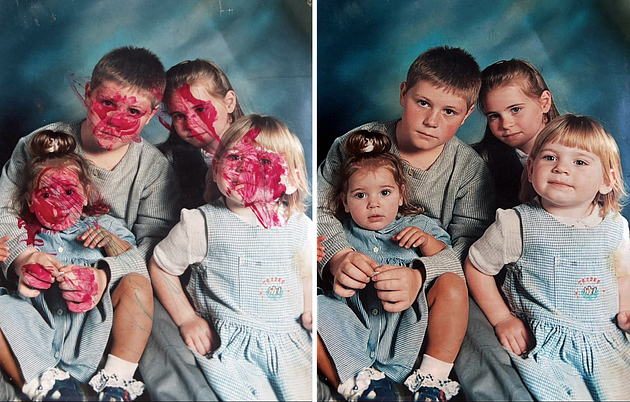
I have seen grown men cry over a restored photograph. They bring in a picture of their great-grandfather. It is torn. It is water-damaged. It is faded to a yellow blur.
They think it is gone forever.
Creative restoration is like time travel. We rebuild the missing pieces. We analyze the remaining details to reconstruct the face. We remove the scratches. We correct the faded chemical dyes.
This is not a simple filter. This is reconstruction. It requires patience. It requires knowledge of historical photography methods.
For a business, offering restoration services is a powerful way to connect with clients. It builds deep trust. But it is labor-intensive. Outsourcing this work to experts allows you to offer the service without bogging down your own workflow.
Creative Compositing and Manipulation
Sometimes, the photo you need cannot be taken. It must be built.
Imagine you are selling a hiking boot. You want a shot of the boot on a snowy peak in the Himalayas. But you are in a studio in London. You do not have the budget to fly a crew to Nepal.
This is where creative compositing saves the day.
We take a studio shot of the boot. We take a stock photo of the mountain. We blend them.
This sounds easy. It is not. The lighting must match. The shadows must fall in the same direction. The color temperature must be identical. If you get it wrong, it looks like a cheap sticker.
To do this right, you first need a perfect isolation of the product. You need to cut it out with surgical precision. This is where an affordable clipping path service becomes the foundation of your creativity. Once the object is isolated cleanly, the creative possibilities are endless. You can place that boot anywhere in the universe.
The “Ghost Mannequin” Effect
In the apparel industry, this is the standard for creative presentation.
You want to show the shape of a shirt. But you don’t want a model distracting the customer. And you don’t want a flat, folded shirt on a table.
You want the shirt to look like an invisible person is wearing it. You want to see the curve of the chest and the inside of the collar.
This is the “Ghost Mannequin” technique. It involves taking multiple photos. One of the shirt on a mannequin. One of the shirt inside out.
Then, we merge them. We remove the mannequin. We stitch the neck together. We create a 3D effect on a 2D screen. It is highly technical creative work. It gives the customer confidence in the fit and quality of the garment.

Color Grading for Emotional Impact
Cinema uses color to manipulate your feelings. The Matrix was green. Mad Max was orange.
Photography is no different. Creative color grading sets the tone.
A wedding photographer might want a “boho” look. This means desaturated greens, warm skin tones, and soft contrast. A sports photographer might want a “gritty” look. This means high contrast, crushed blacks, and cool tones.
This is not about accuracy. It is about style. It is about branding.
A creative editing service works with you to develop this “Look Up Table” (LUT). We apply it consistently. We ensure that your portfolio has a cohesive, artistic voice. This is how you build a recognizable brand style.
Vector Conversion: From Pixel to Print
Sometimes, a photo is not enough. You need a graphic.
You have a logo that is a low-quality JPEG. You need to print it on a billboard. If you blow up the JPEG, it will look pixelated. It will look terrible.
You need to convert it to a vector.
This involves manually tracing the image. We turn pixels into mathematical lines. A vector can be scaled to the size of the moon and it will never lose quality.
This is a vital service for branding agencies and print shops. It bridges the gap between photography and graphic design. It is a technical skill that saves brands from embarrassing print disasters.
Why You Cannot Automate Creativity
We live in the age of AI. There are apps that promise to do all of this with one click.
I have tested them all. They are impressive toys. They are not professional tools.
AI can remove a background. But it cannot understand the emotion of a portrait. It cannot restore a torn photo of a grandmother with care. It cannot make a creative composite that defies the laws of physics but still looks real.
Creativity requires a human soul. It requires judgment.
A machine does not know if a smile looks genuine or creepy. A machine does not know if a shadow looks dramatic or just dark.
For high-end creative work, you need a human partner. You need an artist sitting behind the screen.

Conclusion: The Business of Art
In my 30 years, I have learned that the most successful businesses are the ones that value quality.
They do not cut corners on their visuals. They understand that a restored photo is a family heirloom. They understand that a creative composite is a marketing weapon.
Creative photo editing is an investment. It elevates your brand above the noise. It shows your customers that you care about details.
Do not try to be a jack-of-all-trades. You are the photographer. You are the visionary. You are the business owner.
Let the experts handle the pixels. Let the artists handle the retouching.
If you are looking for a partner who understands the delicate balance between technology and art, look to industry leaders like Pro Photoshop Expert. They have the experience to handle the most complex restoration and the most delicate retouching.
Your images are your legacy. Make sure they are masterpieces. Invest in creative editing. It is the secret to lasting impact in a visual world.


Comments
Post a Comment