Make Every Photo Look Expensive
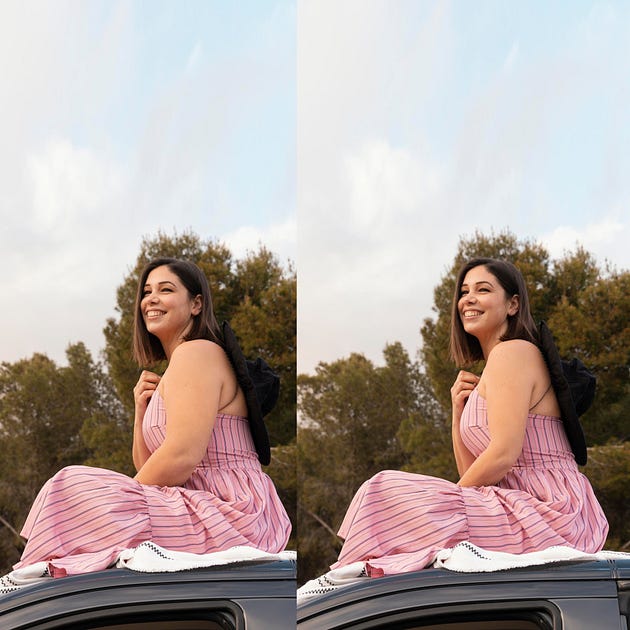
Perceived value is the only value that matters in the digital marketplace.
If a watch looks like it costs $50, you cannot sell it for $5,000. It does not matter if the movement is Swiss or the casing is gold. If the photo looks cheap, the product is cheap.
Luxury is a visual language. It is a specific combination of lighting, clarity, and color that signals to the brain: “This is high quality. This is worth the money.”
Most brands fail to speak this language. They upload flat, gray, lifeless images. They compete on price because their visuals do not allow them to compete on value.
But you can hack this system. You do not need a $50,000 camera setup. You do not need a studio in Milan.
You need post-production mastery.
Editing is the alchemy that turns lead into gold. It transforms a standard product shot into a luxury asset. Here is how professional editing techniques make every photo look expensive.
The “Rich” Black Point
Cheap photos look “muddy.” The blacks are dark gray. The whites are light gray. The image lacks punch. It feels washed out, like an old newspaper.
Expensive photos have “density.”
To achieve this, you must master the black point. You need deep, true blacks. You need crisp, clean whites. This creates dynamic range.
This is not done by simply dragging the “Contrast” slider up. That destroys detail. It crushes the shadows.
It requires precise manipulation of “Curves.” A professional photo editing service adjusts the tonal range zone by zone. We ensure the shadows are rich and mysterious, but still hold detail. We ensure the highlights sparkle, but do not blow out. This depth makes the subject feel three-dimensional and tangible.

Texture is Currency
In the luxury market, the customer buys the material. They buy the grain of the leather. They buy the facet of the diamond. They buy the weave of the silk.
Cheap editing destroys texture. Automated smoothing tools turn skin into plastic and leather into rubber.
Expensive editing worships texture.
We use techniques like “High Pass Sharpening” and “Frequency Separation.” These allow us to sharpen the texture without sharpening the noise.
When a customer zooms in and sees the individual pores of the leather strap, they subconsciously understand the quality. They can “feel” the product with their eyes. Texture conveys authenticity. Authenticity commands a higher price.
The Surgical Cut-Out
Nothing devalues a product faster than a bad background removal.
If the edge of your product is fuzzy, it looks like a sticker. If there is a white “halo” around a dark object, it looks like an amateur school project.
Luxury demands precision. The transition between the product and the background must be mathematical.
This requires the “Pen Tool.” It is a manual process. It creates a vector path that follows the exact geometry of the object.
You need an affordable clipping path service to execute this at scale. Whether it is a complex chandelier or a simple shoe, the edge must be razor-sharp. When the isolation is perfect, the product looks like it is floating in a premium space. It removes the clutter and focuses 100% of the attention on the item.
Sophisticated Color Grading
Color evokes emotion. But “expensive” colors are different from “cheap” colors.
Cheap colors are often oversaturated and neon. They scream for attention. They look like a discount flyer.
Expensive colors are refined. They are often slightly desaturated. They are specific.
- Instead of a neon green, it is a deep emerald.
- Instead of a bright yellow, it is a muted gold.
- Instead of a standard blue, it is a rich navy.
Professional editors manipulate the “Hue, Saturation, and Luminance” (HSL) sliders. We shift the colors to a more premium palette. We remove color casts — like the ugly yellow tint from indoor bulbs — that make white products look dirty. Clean, sophisticated color tells the customer that the brand is curated and high-end.

Symmetry and Order
Chaos is cheap. Order is expensive.
Look at a Wes Anderson movie or an Apple ad. Everything is perfectly symmetrical. Everything is aligned.
In a raw photo, things are rarely perfect. The product might be slightly tilted. The bottle label might be off-center. The horizon line might be crooked.
“Expensive” editing corrects reality.
We use alignment tools to ensure the product is perfectly vertical. We fix the perspective so the lines are parallel. We use the “Liquify” tool to make sure a handbag sits perfectly upright and doesn’t look slouchy.
This geometric perfection is pleasing to the human brain. It suggests engineering. It suggests care. It creates a sense of stability that low-end brands lack.
The Removal of Distractions
Luxury is minimalist. It is about the absence of noise.
A cheap photo is cluttered. There is a wrinkle in the backdrop. There is a reflection of the studio light. There is a fingerprint on the metal.
These distractions fight for the viewer’s attention. They lower the perceived value.
We scrub the image. We remove the dust. We remove the scratches. We remove the distracting reflections.
The goal is to create a “clean” image. When the eye has nowhere else to look, it falls in love with the product. The cleaner the image, the more premium the product appears.
Consistency as a Brand Asset
A single great photo does not make a luxury brand. A consistent library of great photos does.
If you walk into a Cartier store, every display case is lit exactly the same way.
Your website must mirror this. If one product has a grey background and the next has a white background, the illusion of luxury breaks.
You need a partner who can enforce a visual standard across thousands of SKUs. Industry leaders like Pro Photoshop Expert specialize in this type of brand governance. They ensure that every shadow falls at the same angle and every metal tone matches. This uniformity signals that you are an established, trustworthy authority in your niche.

Conclusion
Making a photo look expensive is not about lying. It is about polishing.
It is about presenting your product in its absolute best light. It is about removing the barriers of bad lighting and camera limitations so the true quality of the item shines through.
When your photos look expensive, you attract a different caliber of customer. You attract the customer who is looking for quality, not just a bargain.
Do not settle for “good enough.” Good enough is for the discount bin. Aim for expensive. Aim for pixel-perfect. It is the smartest investment you can make in your brand’s future.


Comments
Post a Comment