Pixel-Perfect Photo Editing for Serious Brands
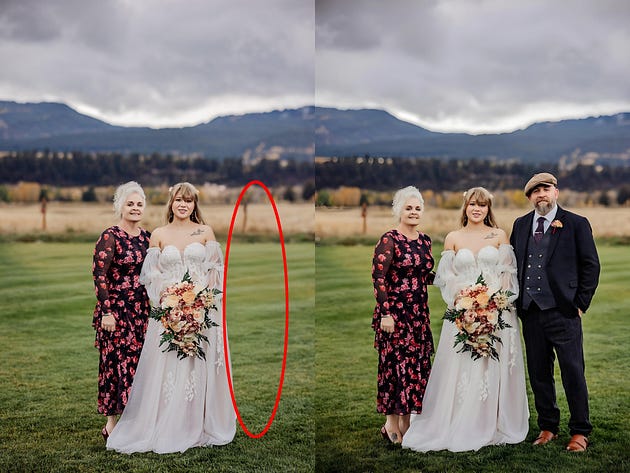
In the high-stakes world of global commerce, there is no room for error. A brand is not defined by its mission statement. It is defined by its presentation.
The digital shelf is ruthless. Customers browse on high-resolution Retina displays. They zoom in to 400%. They hunt for flaws.
If they find a jagged edge, they lose trust. If they see a dust speck, they question quality. If the color is slightly off, they hesitate.
“Pixel-perfect” is not a buzzword. It is a technical standard. It is the absolute requirement for any brand that wants to compete at the top level.
Serious brands understand this. Apple does not release a “good enough” image. Rolex does not release a “decent” image. They release perfection.
Achieving this level of quality requires more than software. It requires discipline. It requires a partner who treats every pixel as a liability or an asset.
Here is why pixel-perfect editing is the only viable strategy for serious business growth.
The Definition of Pixel-Perfect
What does “pixel-perfect” actually mean?
It means the image holds up under extreme scrutiny.
Open an image in Photoshop. Zoom in until you see the individual square pixels.
In an amateur edit, you will see “artifacts.” You will see blurred lines where the product meets the background. You will see “halos” — a faint glow of the original background color contaminating the edge.
In a pixel-perfect edit, these errors do not exist. The edge is razor-sharp. The transition is mathematical. The color values are pure.
This difference is subtle to the conscious mind, but loud to the subconscious. A clean image feels expensive. A messy image feels cheap. Your editing standard dictates your price point.

Why Professional Photo Editing is Non-Negotiable
For a serious brand, the image is the product.
In e-commerce, the customer cannot touch the item. The image is their only reality. If the image is flawed, the product is flawed.
Many companies try to cut costs here. They hire the cheapest freelancer. They use automated AI tools.
This is a strategic error. Automated tools cannot distinguish between a shadow and a dark fabric. They cannot understand the refractive properties of glass.
A professional photo editing service provides the human judgment necessary for perfection. It ensures that the metal looks like metal. It ensures the skin looks like skin. It maintains the integrity of the texture while removing the distractions. This is the difference between a product that sits in a cart and a product that ships.
The Science of the Clipping Path
The most common failure point in product photography is the “cut-out.”
You need to isolate the product from its background. This allows you to place it on pure white for Amazon, or on a lifestyle background for a banner ad.
If this isolation is done with a “Magic Wand” tool, it destroys the edge. It looks jagged. It looks like a sticker cut out by a child.
Pixel-perfect isolation requires the “Pen Tool.” An editor manually places anchor points around the object. They trace the curves using vector paths.
This is tedious work. It takes time. But it is essential.
You need an affordable clipping path service that specializes in this manual precision. Whether it is a bicycle wheel with complex spokes or a necklace with fine chains, the background must be removed without deleting a single pixel of the product. This surgical precision is the hallmark of a premium brand.

Color Accuracy and Return Rates
One of the biggest costs for online retailers is returns.
A customer buys a “Cherry Red” sweater. They receive it. It looks “Burgundy.” They are disappointed. They return it.
You pay for the shipping. You pay for the restocking. You lose the customer.
Often, the product was fine. The photo was wrong.
Cameras are not perfect. Studio lighting can shift colors. A pixel-perfect workflow includes rigorous color correction.
Editors use color calibration tools. They check the RGB values against the real-world sample. They ensure that the “Digital Red” matches the “Physical Red” exactly.
This is not just editing. This is inventory management. Accurate photos reduce returns. They protect your profit margins.
Retouching: The Art of Invisibility
The best retouching is the kind you never see.
When an amateur retouches a face or a product, it looks processed. The skin looks like plastic. The jewelry looks like a 3D render.
This creates the “Uncanny Valley” effect. It feels fake. It breaks trust.
Serious brands require “invisible retouching.”
The goal is to remove the temporary imperfections while keeping the permanent character.
- Remove the dust, keep the grain.
- Remove the blemish, keep the skin texture.
- Remove the reflection, keep the shine.
This requires a high level of artistry. It requires zooming in to 100% and working pixel by pixel. It respects the subject matter. It elevates the product without turning it into a cartoon.
Consistency Builds Authority
Look at a luxury brand’s Instagram feed. Look at their catalog.
Every shadow falls at the same angle. Every white background is the same shade of white. Every metal tone is identical.
This consistency signals authority. It shows that the brand is in control.
If your images are inconsistent, you look disorganized.
- Image A is cool-toned.
- Image B is warm-toned.
- Image C has high contrast.
- Image D is flat.
This visual chaos confuses the customer. It suggests a lack of attention to detail.
Pixel-perfect editing mandates a “Style Guide.” Every image must pass through the same set of rules. This creates a cohesive visual ecosystem. It creates a brand signature that is instantly satisfying to the eye.
Scalability Without Compromise
It is easy to edit one image perfectly. It is hard to edit 10,000 images perfectly.
Serious brands have volume. They have seasonal launches. They have Black Friday surges.
The challenge is maintaining pixel-perfect standards while processing thousands of SKUs in 24 hours.
A freelancer cannot do this. An in-house team often drowns.
You need a partner with infrastructure. You need a partner with a dedicated Quality Assurance (QA) department. The QA team does not edit. They only check. They reject anything that is not perfect.
Industry leaders like Pro Photoshop Expert are built for this exact scenario. They combine large-scale capacity with strict quality control protocols. They ensure that the 1,000th image is just as sharp as the first.

Optimization for Web Performance
A pixel-perfect image is useless if it takes 10 seconds to load.
High-resolution photography creates massive files. 50MB TIFFs are great for billboards. They are suicide for websites.
Part of the pixel-perfect workflow is optimization.
You must find the exact balance point. You need to compress the file size so it loads instantly. But you cannot compress it so much that it becomes “blocky” or pixelated.
This requires advanced compression algorithms. It requires specific knowledge of file formats like WebP.
A professional service delivers files that are “Web Ready.” They are cropped to the exact dimensions of your container. They are stripped of metadata. They are sharp on the screen, but light on the server. This improves your SEO. It improves your user experience.
Conclusion
In the modern marketplace, mediocrity is invisible.
Consumers are bombarded with millions of images every day. They have become visual connoisseurs. They filter out the noise. They filter out the amateur.
They stop for quality. They stop for clarity.
Pixel-perfect photo editing is the price of entry for serious brands. It is the visual handshake that proves you are a professional.
Do not leave your brand perception to chance. Do not rely on automated tools that guess. Rely on skilled artisans who measure.
Invest in perfection. Your products deserve it. Your customers expect it. Your bottom line depends on it.


Comments
Post a Comment